Beta Carotene Color: Natural Food Color for USA Food & Beverage Manufacturers

Image of Beta Carotene Natural Color in Food & Beverage Products

Beta Carotene Color: Natural Food Color for USA Food & Beverage Manufacturers
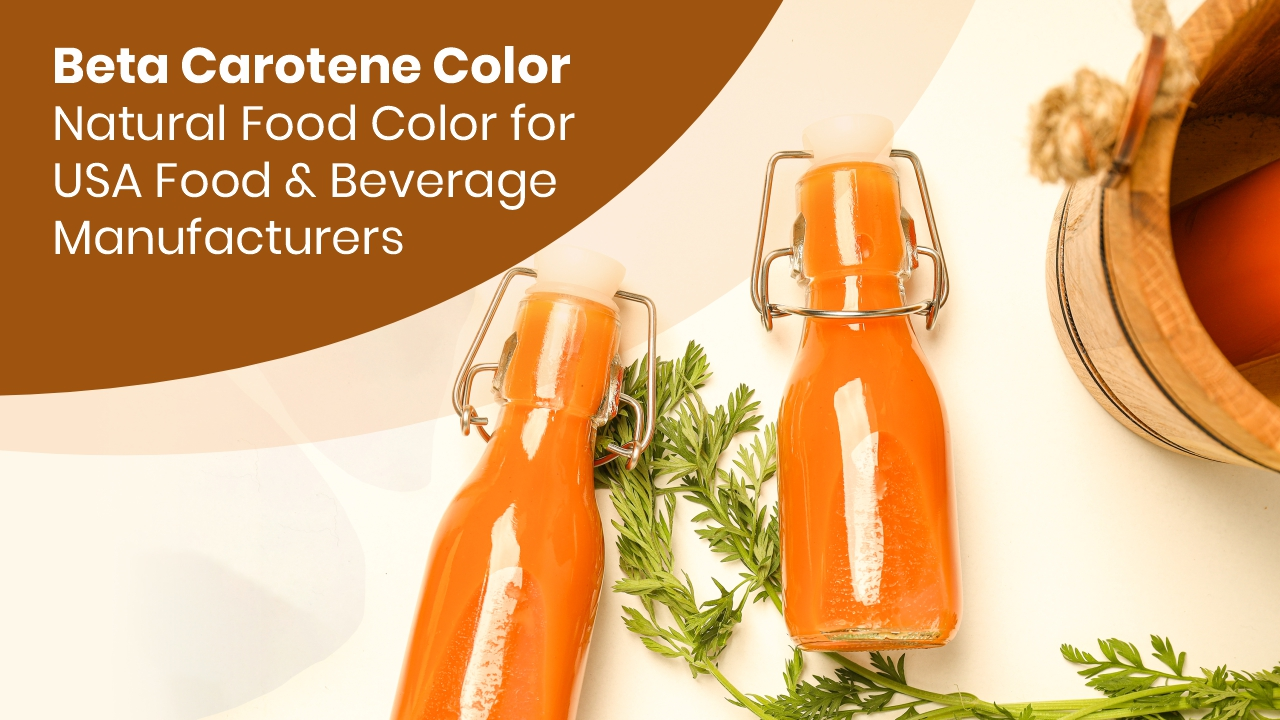
Image of Beta Carotene Natural Color in Food & Beverage Products
Ashutosh Biyani
Ashutosh Biyani

Director at Vinayak Ingredients, shares insights on Natural Food Colours, Modified Starch, Fruit & Vegetable Powders, and Fat Powder, helping businesses make informed sourcing decisions and develop high-quality food products.

Introduction: Why Natural Ingredients Are Gaining Preference

The food industry in the United States is transforming rapidly as consumer opinions shift towards foods with natural, recognized ingredients. Growing worries over artificial additives, along with state-level regulations to outlaw petroleum-based dyes, have fueled the momentum towards natural colorants. Here, beta carotene is among the most widely used natural colorants with a balance of good color intensity and nutritional value. Market studies predict steady growth for beta carotene uses along with other food colors/food dyes of natural origin, and the food and beverage industry is the largest market sector.

What is Beta Carotene Color

Beta carotene is a carotenoid pigment naturally occurring in carrots, sweet potatoes, spinach, and other vegetables. Its molecular shape allows it to soak up light at the blue end of the visible spectrum, and for this reason, it imparts deep yellow to orange hues. Apart from its coloring capability, beta carotene is a provitamin A, which functionally distinguishes it from most other food colorings. Commercially, it may be available in a range of delivery forms like water-dispersible powders, oil suspensions, and beadlet encapsulations, in order to enable the manufacturer to formulate its use to fit individual product matrices. This quality has provided it a steady place in product ranges from soft drinks to bakery fillings.

Regulatory Status and Safety in the USA

Beta carotene is a Food and Drug Administration (FDA) approved color additive in the United States. It can be used by manufacturers without FDA permission on a batch-by-batch basis, provided that it meets identity and purity requirements and is applied in compliance with Good Manufacturing Practice (GMP). It is also GRAS (Generally Recognized As Safe), further contributing to its safety profile

Principal Uses in USA Food Production

Beta carotene is valued for its stability to give yellow to orange shades that match consumers’ best perception of natural color. Beta carotene is applied extensively in milk foods, where it gives the characteristic golden color. In liquids, beta carotene imparts an attractive orange color. Bakery and confectionery products also benefit from its warm hues to provide depth to cakes, coatings, and sugar confections. In addition, dietary supplements and nutraceuticals also use beta carotene both for color and vitamin A activity and thereby impart the twin benefits of color and nutrition.

Health Value and Functional Benefit

Unlike artificial colors, beta carotene also imparts physiological functionality in addition to color. It is a precursor to vitamin A. Beta carotene is a free radical quencher as well, neutralizing free radicals that cause oxidative stress and cell damage. The dual value, nutraceutical and functional, has made Beta carotene even more appealing to manufacturers who wish to create their products unique in a health-aware market. Scientific research underscores the fact that food form beta carotene is generally tolerated in most cases, though excessive levels of supplementation regardless of food matrices have been linked to adverse effects in some populations, giving prominence to balanced use.

Case Study: Industry Adaptation

Several leading food manufacturers have reformulated conventional ranges by substituting synthetic colorants with beta carotene to suit customer demand.

For example, beverage companies have introduced fruit drinks and fruit smoothies colored with beta carotene emulsions on color stability grounds as well as a “from nature” positioning. Similarly, bakery companies have turned to beta carotene powders in order to achieve consistent orange shades in icings and fillings, in addition to focusing on the nutritional quality of provitamin A. Industry research confirms that these changes not only improved brand image but also achieved better market acceptance on the part of health-oriented consumers.

Conclusion: The Future of Beta Carotene Color in the USA Food Sector

Beta carotene is well-placed to be a cornerstone in the conversion process to natural food color within the U.S. food and beverage market. Beta carotene is a great alternative for artificial colors by providing an intense vibrant color, granted approval under regulations, and attracting nutritional notice. Further technological advances in encapsulation, and low-cost extraction methods will further improve its stability and open up broader applications. With consistent market demand moving toward functional and natural ingredients, beta carotene stands at the epicenter of product innovation
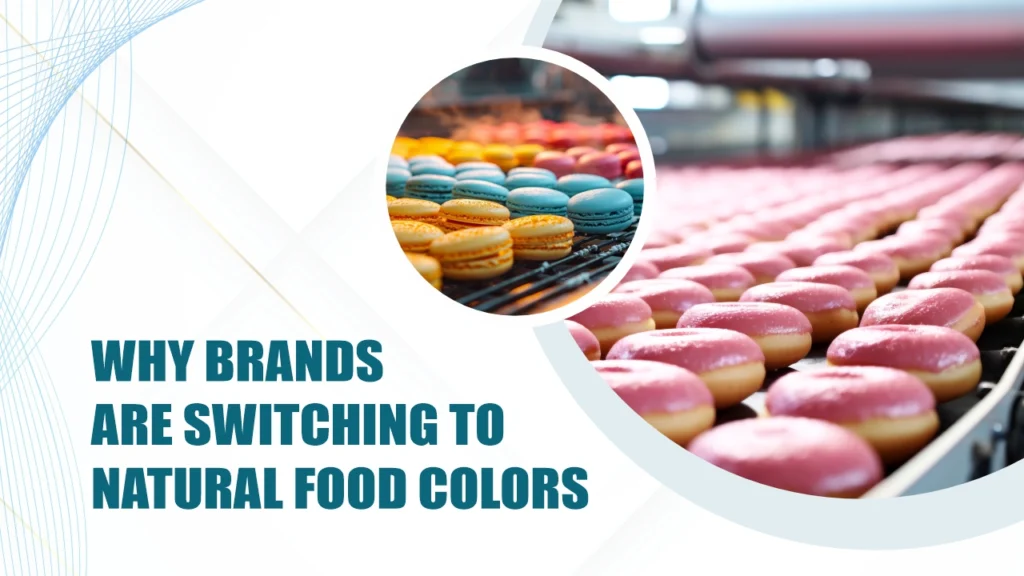
Why Brands Are Making The Switch To Natural Food Colors Introduction

Natural food colors in food and beverage industry innovations

Why Brands Are Making The Switch To Natural Food Colors Introduction

Natural food colors in food and beverage industry innovations

Consumer preference is shifting away from petroleum-derived artificial food color to natural food coloring, on the basis of reasons including safety, transparency, and sustainability. It has been witnessed in consumers, regulators, and food and beverage manufacturers. Natural food dyes are trending as consumers become more sensitive to sensitivities and potential health impacts created by artificial colorings, such as hyperactivity among children and allergic responses among sensitive parties. Food and beverage regulatory bodies across the globe have responded with tighter labeling regimes or new prohibitions, pushing the food and beverage industry towards plant food. This is driven by shifting customer values and health issues.

The Market Trend towards Natural Colors

The global natural food colors market is set to grow sizably, fueled by regulatory limits on artificial dyes and increasing consumer affinity for natural and healthier products. High growth will be witnessed in the Asia-Pacific region, with market revenue from USD 346.4 million in 2022 growing to USD 717.3 million in 2030, corresponding to a CAGR of 9.5%. It is also fueled by widespread high-volume uptake across numerous industries.

The Undisclosed Challenge: Reformulation of Products using Natural Colors

Formulation change to accommodate natural colors is with technical challenges. They are mostly less stable than synthetic colorants, are sensitive to heat, light and pH. Technical innovation is overcoming these issues. Techniques like microencapsulation, nanoemulsions, and refined extraction processes have enhanced  heat, light, and pH stability. These innovations preserve color, improve shelf life, and provide new possibilities for natural color in demanding applications. Breakthroughs in encapsulation and ingredient delivery systems allow natural colorants to preserve strength under different process conditions. Regulatory Pressure on Synthetic Colors

Certain artificial colors are banned or stric labeled in most areas.

EFSA, the European Food Safety Authority, has outlawed food dyes linked to hyperactivity in children.

In the U.S., the Food and Drug Administration prohibited a sequence of petroleum-based dye products, such as FD&C Red No. 3, in cosmetics and certain foods, on grounds of safety. California has also passed a bill prohibiting the use of a number of artificial food colorings in children’s food for hyperactivity and other health causes by 2027. The regulatory environment forces the industry to use plant-based colors such as anthocyanins, carotenoids, and betalains. Sustainability and Consumer Perception Natural dyes are usually derived from renewable crops, vegetable and fruit processing waste or by-products, such as skin, seeds, and pulp.

Use of co-products in this way minimizes food waste and improves circular economy operations. A case in point is grape skin, to be used for anthocyanin pigments, which often comes from wine waste production, and carrot pomace can be processed to produce beta-carotene. The method, apart from reducing the environmental footprint, also reinforces agricultural value chains as it improves farmers’ and processors’ revenues.

Conclusion

The movement towards natural colors in foods is the intersection of regulatory, technological, and consumer forces. Formulation hurdles remain, but ongoing progress in pigment stabilization is making natural options increasingly viable to large-scale production.

Caramel Food Color: Add Depth and Delight to Your Dishes

Caramel Food Color Add Depth and Delight to Your Dishes

Caramel Food Color: Add Depth and Delight to Your Dishes

Welcome to the world of caramel colors! Often considered as the secret behind the rich hues of colas, sauces, and baked goods, caramel food color is a fascinating ingredient steeped in history and science. But what exactly is it, and how does it enhance our food and beverages? Let’s explore the magic of Caramel Food Color, its classes, uses, and its role in today’s culinary landscape.

Caramel Food Color Add Depth and Delight to Your Dishes

Ashutosh Biyani
Ashutosh Biyani

Director at Vinayak Ingredients, shares insights on Natural Food Colours, Modified Starch, Fruit & Vegetable Powders, and Fat Powder, helping businesses make informed sourcing decisions and develop high-quality food products.

What is Caramel Food Color?

Caramel food color is a water-soluble food coloring produced by controlled heat treatment of food grade carbohydrates such as sugars or starches. 

Did you know? 

Carmel food color is the world’s most commonly used food color, and it is recognised for its spectacular performance-enhancing properties in everything from soft drinks to baked goods.

The four classes of caramel

Four classes of caramel color exist depending on the raw materials used to synthesize them. This information helps manufacturers make proper selections of a given caramel color to meet their exact demands:

Class I (E 150a): Plain Caramel Produced by heating carbohydrates either with or without acids or alkalis.

Class II (E150b): Caustic Sulfite Process Caramel Color-Manufactured from sulfur dioxide compounds, which are the source when it is boiled.

Class III (E150c): Ammonia Process Caramel Color – Made from ammonia process caramelisation.

Class IV (E150d): Sulfite Ammonia Process Caramel color-Contains both sulfites and ammonium compounds.

Since each class has it’s unique character and color strength, food manufacturers can achieve their desired appearance in end-products.

Common uses of Caramel Food Color

Caramel food color is flexible and has been employed in almost every industry:

1. The major application of this color is in soft drinks and alcoholic beverages because of the beautiful coloring that it gives.

2. It imparts a warm and appealing color to confectionery and bakery products like chocolates, cakes, and candies.

3. Dairy Products and Desserts: Envision creamy caramel custards and rich ice creams.

4. Savory Foods: It makes the sauces, gravies, soups as well as meat products look so appetizing.

Fun fact

Many pet foods and cereals use caramel colors to ensure that all your food products have a good appearance

Why Opt for Caramel Food Color?

There are reasons, many of them, why caramel food colors are favorites for the manufacturing foods sector:

1. Cost-effective: Caramel colors are less expensive than most natural colorants.

2. Stability: They are relatively very stable with good resistance towards heat and pH level, hence suitable for diverse food processing conditions.

3. Regulatory Approvals: Caramel food colors have a long history of safe use in the food industry, with approvals from regulatory agencies across the globe. This ensures that they meet safety standards for consumers.

As consumers become aware of healthier options, the natural ingredients trend should push for caramel colors from sugar, representing clean labeling, which the health-conscious buyer wants.

Rising Demand for Caramel Colors

Given the growth in food and beverage consumption rising from population growth and a change in dietary habits, the demand for caramel food colors is on a constant increase. Especially under the current circumstances is the movement toward natural and plant-based ingredients as consumers tend to favor recognizable components in their food.

Key takeaway: Caramel colors become part of the clean label movement, according to which brands can boost their pipelines with products that the consumer wants to have transparent and made from natural ingredients.

The Future of Caramel Food Color:

With growing consumer awareness regarding food ingredients and their origin, the future seems bright for caramel food colors. Caramel colors have long been accepted by regulatory agencies and are highly versatile, making them likely to withstand future challenges in the food and beverage industry. This will enable caramel food colors to ride the trend toward more natural and health-conscious options, giving consumers quality products that answer their expectations for taste and transparency. 

Conclusion:

It’s more than a color: it is golden, enhancing both the aesthetic appeal and flavor of thousands of products. With an interesting history, wide range of applications, and course along the modern consumer wave, caramel food color becomes a golden companion in kitchens and food production facilities all over the world. 

So the next time you go guzzling down a rich cola or swooning over a delicious chocolate dessert, remember that magic the caramel food color does behind the scenes, upgrading your taste buds in it.

Lemon Powder: A Natural Boost for Flavor & Freshness

Lemon Powder a Natural Boost For Flavor & Freshness

Lemon Powder a Natural Boost For Flavor & Freshness

Lemon powder is the highly versatile, shelf-stable form of lemon juice produced by spray-drying freshly squeezed lemon juice. This conversion preserves the essence of the citrus flavor of the lemon with ease to be added to food and beverages of all kinds. With its very concentrated lemon flavor, lemon powder is a natural and inexpensive flavoring agent for use in the food industry, where it imparts sour and citrusy flavors much needed in the products.

How is Lemon Powder Produced?

Lemon powder is prepared with a highly specialized spray-drying procedure that conserves every drop of essence present in the juice of the lemons. Freshly squeezed lemons have to be the source of the juice because freshly squeezed lemons contain much oil, which may be further cultivated through the use of lemon powder. This ensures that the powder retains the fresh, vibrant flavor of the lemon and is easily stored and transported. The result is a free-flowing, water-soluble powder that mixes freely into food and drinks without any sticky residue. Citrus powder, and more so lemon powder, not only contributes to stability over time but also gives that flavorful zip manufacturer expect as a result of incorporating natural citrus flavor into their products.

Applications of Lemon Powder in the Food Industry

Lemon powder gives great vibrancy and lots of citrus flavor to cookies, cakes, and pastries. Stability against spoilage makes lemon powder an ideal ingredient in dry powdered mixes to help manufacturers create consistency in flavors. In addition to that, it better enhances sauces, soups, and marinades and adds well-balanced tartness to the recipes. Add lemon powder to spice blends to enhance the taste and add a good puckering sour note for balancing richness in masalas and ready-to-mix recipes. It is excellent as an addition to spice rubs for meats or vegetables for instant citrus punch. In ready-to-cook products like Instant Lemon Rice or Lemon Poha, the fresh zestiness it creates is widely known and contributes to making the product more distinct. Further, the high consumption of lemon powder among beverage companies in flavored sodas, teas, and herbal infusions makes it a valuable ingredient.

It dissolves with no residue, so it becomes a go-to ingredient in ready-to-drink products in both soft drinks and juice and powdered mixes for beverages, providing a natural, fresh lemon flavor, giving a welcomed vitamin C kick, and helps regulate the amount of sweetness in a drink through its tart flavors. Lemon powder is also used in pickles, sauces, and salad dressings. This does strengthen citrus flavor and increases shelf life. It does well in snack mixes and seasonings, wherein a burst of lemon might add complexity to flavor. 

Advantages of Lemon Powder

Lemon powder offers several advantages, thus making it a practically suitable industrial choice.

It also has a shelf life longer than fresh lemon juice, which cannot even get the chance to spoil so there is zero possibility of spoilage, zero wastage, and more efficiency in the production process.

Fresh lemon juice is also different in flavor and acidity so is rarely the best option for mass production which means that consistency in taste is one of its primary emphases. Lemon powder also is used as a natural preservative in spice blends and ready-mix powders because of its intrinsic antioxidant properties. So fresh spices in the spice blend last longer. It’s also an inexpensive option for those companies requiring the addition of natural citrus flavor without the trouble of working with fresh ingredients. Its long shelf life with a high concentration of flavor adds more value to the manufacturers since this offers consistent quality but at a lower price.  

Vinayak ingredient’s solution for Lemon Powder  

As a leading spray-dried lemon powder manufacturer, Vinayak Ingredients offers a product in the market that is not equaled. Vinayak Ingredients India Pvt. Ltd. provides additive-free and preservative-free lemon powder, ensuring it meets the highest standards for health-conscious and natural product lines, along with employing advanced spray-drying technology to ensure consistency in taste and quality of every batch of lemon powder. Its versatility grants applications in food and pharmaceuticals to enhance products, including instant soups, beverages, and spice blends, while minimizing spoilage and maximizing profitability. With a market position as the top bulk supplier of spray-dried lemon powder in India, we are able to offer competitive prices and maintain top-grade purity. Our lemon powder is an excellent choice for businesses seeking naturally flavored and shelf-stable ingredients. Vinayak’s lemon powder is indeed the best taste of citrusy flavor and nutrient value for masalas and beverages or other instant mixes. It is growing to meet the demand for high-quality, natural ingredients in today’s market.

Paprika Natural Food color: A Multi-Faceted Ingredient

Paprika Natural Food color A Multi-Faceted Ingredient

Paprika Natural Food color A Multi-Faceted Ingredient

Do you remember the reddish-orange color of that perfectly grilled paprika chicken or the glistening of a classic Hungarian goulash? The mystery lies not in artificial food dyes but in a single, really potent spice: paprika natural food color. This versatile ingredient has much history behind it and a surprising depth to its flavor, so much more than simple aesthetics. Derived from Capsicum annum, paprika lends that warm, inviting touch to your dishes. Depending on the type of paprika used, it may give an aftertaste which is often smoky. This makes it a versatile and natural alternative to synthetic colors.

Be it natural red food color for sausages or orange color for snacks, paprika colors can add that splash of color to your food without reducing the flavor. Vinayak Ingredients offers oil-based as well as water-soluble paprika oleoresin for different applications. 


A Spectrum of Tones: Exploring the Warmth of Paprika

Paprika, with its warm tones ranging from deep orange to rich red, enhances the visual appeal of meat products. As a natural colorant, it lends vibrant hues to sausages, smoked meats, and marinades, elevating product presentation. Its dynamic color enhances both visual and taste appeal, offering a natural alternative to artificial dyes. For meat manufacturers, paprika delivers not just aesthetics but solutions that meet consumer demand for natural ingredients. 


From Garden to Garnish: A Spicy Journey Through History

Paprika, a pepper extract introduced to Europe centuries ago, is now one of the most important ingredients in food production worldwide. Because of its long and proud history, it is widespread among commercial food industries. Such a common coloring agent is created as a natural alternative to other artificial colorants. Paprika is a clean-label solution for the food manufacturer: it enhances the vibrant hues of processed meats, adds depth to sauces, and satisfies consumers’ demands for more natural ingredients without compromising on flavor or appearance. 


Beyond the Rainbow: Possible Health Effects of Paprika

Paprika isn’t just about color and flavor. It also has notable potential for health benefits due to its rich content of vitamins A and C. These vitamins help maintain strong eyesight and a healthy immune system. Some even contain capsaicin, also known for its ability to ease pain as well as being anti-inflammatory. Thus, there is still much to be learned, but certainly, paprika is a very  flavorful, healthy addition to the cuisine. 

 
Paprika Oleoresin: coloring agent and  flavor enhancer

Paprika oleoresin is a natural, stable product that gives a natural boost to color and flavor without impacting the food adversely. The oleoresin, due to its capsanthin and capsorubin, has various bright shades that range from pale yellow to fiery reddish orange. More than aleuropein oleoresin, this has greater stability to acid, light, and heat; it is thus capable of all food applications with consistent look results throughout the range of dishes.

 Paprika fits into multiple lines of meat products ranging from sausages and hot dogs, through burgers, to processed meats. The deep colors enriched the color line of these meat products while a subtle paprika  flavor imbued earthly tones to the general taste. For soups and sauces, paprika adds flavor and color; from tomato soup to chipotle sauce, delicious smoky  flavors create a pleasing appearance in the dish.

Paprika adds color to seasonings and marinades. Vibrant colors add a sensory thrill before the first bite from a marinade, while rich tones are also flaunted in chips, pretzels, crackers, and pastry items in snacks and  savory baked goods. 

 Paprika also has potential applications beyond its usual  savory uses. It would be applied to pre-packaged foods and canning products. The stability of paprika ensures stable coloring in pre-prepared meals as well as in canned items, giving an appetizing appearance that lasts. Because it holds color very well across all applications, its flexibility makes it a suitable choice where color is a great requirement. 

 
Selecting the Right Form of Paprika Oleoresin

The proper form of oleoresin paprika will have to be selected to obtain the right effects. Water-soluble liquids and powders are useful in sauces, soups, and beverages to create a smooth animation of color. Oil-soluble liquids may be used in fat-based products including mayonnaise, processed cheese, and spreads. All forms of oleoresin stabilize in a variety of conditions where the product will finish with vibrant appearance and rich  flavor. 

 
Color Confidence in Food Applications

Paprika oleoresin has excellent stability in food products, showing vibrant color up to high processing temperatures. Highly resistant towards light and pH variation, it delivers consistent coloration applications like meat products, snacks, sauces. However, the depth of flavor is beyond the appeal of color; it comes with the nutritional benefits of vitamins A and C, aiding in immune function and anti-inflammation. We at Vinayak Ingredients specialise to offer you natural solutions like paprika oleoresin for the richness in color and flavor to enhance your products. 

Do you want to find alternatives to artificial colors? Try our paprika extracts for a beautiful, flavorful, and natural enhancement. Contact us today to explore how Vinayak Ingredients can transform your next culinary innovation.

Beetroot: Enhancing Visual Appeal in Food Manufacturing

Beetroot: Enhancing Visual Appeal in Food Manufacturing


Beetroot: Enhancing Visual Appeal in Food Manufacturing


Beetroot: Enhancing Visual Appeal in Food Manufacturing


Imagine biting into your favourite dish and being drawn in by the vibrant colours that promise delight before you even taste it. Brands frequently use these appealing hues to capture your attention, but as consumer demands shift towards clean-label products, artificial colours are declining. Enter the little-known beetroot—a nutrient-dense food that provides a natural source of deep reds to fun pink shades. Beetroot’s hidden weapon? Betacyanins. These unique water-soluble pigments give this vegetable its vibrant colour. Unlike synthetic pigments, betalains found in beetroot are non-toxic and offer health benefits like anti-inflammatory and antioxidant properties. Beetroot is more than just its resounding red hue. The numerous betalain pigments in beets exhibit very effective versatility, providing an exponential range of colours, from delicate pink to rich deep purple. 

Imagine holding your favourite snack—a chip, puff, or something else—and it’s a vibrant pink. The rich colour comes from using beetroot powder as a natural food colouring. It’s not just about taste; the visual appeal matters, too. An effective culinary presentation creates a visual experience that is as natural and captivating as the flavours themselves. “Beets are essential for any brand that wants to make a difference while maintaining a clean label. Using beets, brands can tap into many possibilities and create more vibrant colours in their products.”

Moreover, they help enrich the dish visually and can be used with herbs and spices, adding new tastes, which almost unexpectedly appear in the dish. Condiments in synthetic red can be turned into flavorful and colourful beetroot puree for added originality to the tomato sauce, salsa, dip, etc. Application possibilities are not only in bakery products, but also beet powder can be applied in colouring cakes and muffins; and all kinds of bread, with pink and red tints, and frostings and icings are naturally tinted with beet natural food colour for desserts. Beetroots are a healthy replacement in Red velvet-flavoured products   In the confectionery industry, the twirling of beetroot powder in the colouring of candies, gummies, and marshmallows is more healthful than chemical options and a blessing for parents looking to find healthier choices for their kids.

In cooking, beets almost have a magical quality in addition to making any plate pretty. Beetroot puree acts as a red beetroot food colour for veggie burgers, sausages, and other meat substitutes. This not only gives a better appearance to the food item, which looks like genuine meat-based food products but also eliminates the original animal protein and replaces it with plant-based protein, which has a niche globally for being healthier and eco-friendly. But indeed the benefits don’t end here. Beetroot powder is inherently sweet; thus, the added sugar content can be reduced in some products. Also, it has a significant role in the intake of Dietary Fiber that makes up part of the food item’s nutritional content.

Natural food colouring stands a bright chance with beetroot natural food colour in the days to come. Being a vegetable with a rather impressive hue and a high number of applications, as well as possible useful properties – beetroot is truly ready to take its place among the natural food colourants. It, therefore, becomes apparent that invariably, the incorporation of beetroot; this clean-label ingredient can be used to develop appealing, wholesome food products, that, when consumed are not just exhilarating but also healthy- in a generation that is increasingly becoming conscious of its health. From confectionery and snacks with bright colours to pastries and other baked products, beetroot is a natural additive that will allow you to achieve not only the set colour effect but also the desired functionality. Thus the next time you notice a vibrant red sauce or a playful pink snack, what you are seeing might just be the magic of the beetroot working its colorful magic.

Vinayak Food Ingredients is a leading supplier and manufacturer of natural beetroot food colour. They offer a range of natural food colours such as caramel, beet, and beta carotene to various food industries. Vinayak’s natural food colours are carefully manufactured to retain natural flavours and nutritional profiles while ensuring shelf stability. These colours are used in making butter, bakery products, snacks, desserts, chocolates, sauces, and more.