
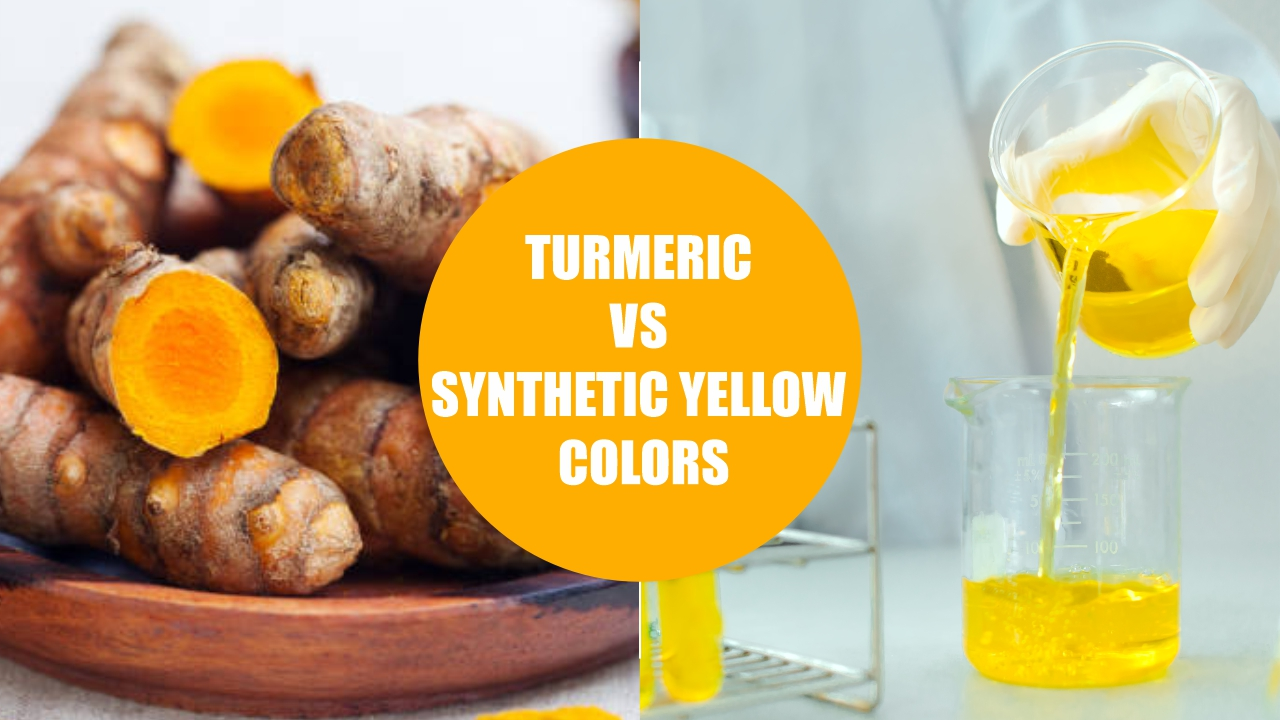
Food manufacturers often compare turmeric natural yellow food color with synthetic yellow colours when developing products that require yellow shade appeal. Turmeric-based colour solutions may support selected food applications where a natural positioning is preferred, while synthetic colours may behave differently in shade strength, stability and regulatory requirements. The right choice depends on product type, processing conditions, target shade and label goals.
Request application guidance for turmeric-based yellow colour, annatto, beta carotene or other natural colour alternatives based on your product type and target shade.
Turmeric color is obtained from the Curcuma longa rhizome, whose main active ingredient, curcumin, is responsible for the characteristic bright yellow color. Traditionally applied in food and medicine, it is increasingly becoming relevant in food processing on account of its bright color and natural origin. Turmeric color in processed food has the virtue of warm shade, ease of use, and compatibility with oil and water-based applications. It finds wide application in blends, snacks, sauces, pickles, rice foods, and dairy foods. Its usability in dry mix applications and heat-treated foods allows it to be the most sought-after yellow (PMC) by manufacturers as a stable natural alternative.
Dyes like Tartrazine (Yellow 5) and Sunset Yellow (Yellow 6) are petroleum-based and still used as additives in most packaged food. Various studies have linked them to health issues. For instance, studies suggest that tartrazine is likely to induce hyperactivity in children (CSPI). In certain groups, such dyes have also been reported to trigger allergic reactions and immunologic responses. Regulatory agencies such as EFSA and FDA have examined these dyes and, in a few instances, mandated warning labels. Their chemical structure, especially their azo moieties, has been the focus of toxicological research for decades.
Curcumin, the pigment in turmeric, has been studied at length for its biological activity. It has antioxidant and anti-inflammatory activities. Research indicates that it can reduce oxidative stress (Healthline) and maintain joint function. There is also emerging evidence that it plays a role in improving metabolic and cardiovascular health. Curcumin acts on cellular signaling and maintains the body’s own detoxification processes. These qualities make it a compound of interest for both the food and nutraceutical industries.
Turmeric color provides a rich, golden-yellow hue. Although it might need greater inclusion levels than artificial dyes, formulation developments such as microencapsulation have improved its pigment retention and consistency (MDPI). It is consistently reliable in both transparent and opaque formulations and is available for a broad range of food uses.
ECOCOL’s Curcumin is pH and heat-sensitive. It shows excellent heat stability across various applications. It works best in the pH range of 3.0-6.0. It offers high color payoff with small dosages.
Synthetic dyes usually have a longer shelf life, but new formulations of turmeric color have significantly bridged the gap. Turmeric colors can last for up to 12 months if stored in low-humidity and light-proof packaging. Spray drying and emulsification are among the methods that have made them easier to use in many food matrices without affecting performance.
If you are evaluating natural yellow food colour options, Vinayak Ingredients can help compare turmeric-based solutions with annatto, beta carotene and other natural colour alternatives based on your application.
Why Choose Vinayak: Reliable Manufacturer & Exporter of Turmeric Color to the USA
At Vinayak, we are expert manufacturers of natural turmeric color in various forms, custom-made for food and beverage manufacturers worldwide.
Our Ecocol range provides
We provide turmeric color solutions for food and beverage producers in regulated markets such as the USA with high-performance, quality, safety, and formulation meeting solutions, perfect for replacing synthetic yellow dyes in large volumes.
They compare shade, stability, label positioning, application suitability and regulatory requirements.
Turmeric-based solutions may be evaluated for selected yellow colour applications.
Annatto and beta carotene may be considered depending on target shade and product type.
Yes. Share application, shade and processing details.
Yes. Contact the team with your requirement.
Contact Us
If you’re looking to replace synthetic yellow colors with turmeric-based alternatives or want customized formulation support, reach out to us:
✉️ inquiry@vinayakcorporation.com 🌐 www.vinayakcorporation.com
Share your product type, target yellow shade and processing conditions to evaluate turmeric, annatto, beta carotene or other natural colour options.
Vinayak Ingredients (INDIA) Pvt. Ltd. has over 24+ years of experience in delivering high-quality Food Additives. We focus and manufacture products obtained from Natural sources such as Natural Colors, Spray-dried Fruit and Vegetable Powders & Natural Extracts which are eco-friendly and environmentally sustainable.