
The global meat and protein industry is rapidly changing due to increasing demand for convenience foods, sophisticated technologies in manufacturing, and an expansion of plant-based and blended meat formats. In all of these categories of product, one single quality attribute impacts consumer perception and successful product acceptance: color.
For the manufacturers, effective achievement of stable, even, and regulation-compliant color is not just an appearance feature, it is a functional requirement which impacts the shelf life, and market acceptance. This article will outline the key challenges behind color stability, present the option of natural color ingredients available today, and describe the innovations shaping the future of meat coloration.

Director at Vinayak Ingredients, shares insights on Natural Food Colours, Modified Starch, Fruit & Vegetable Powders, and Fat Powder, helping businesses make informed sourcing decisions and develop high-quality food products.
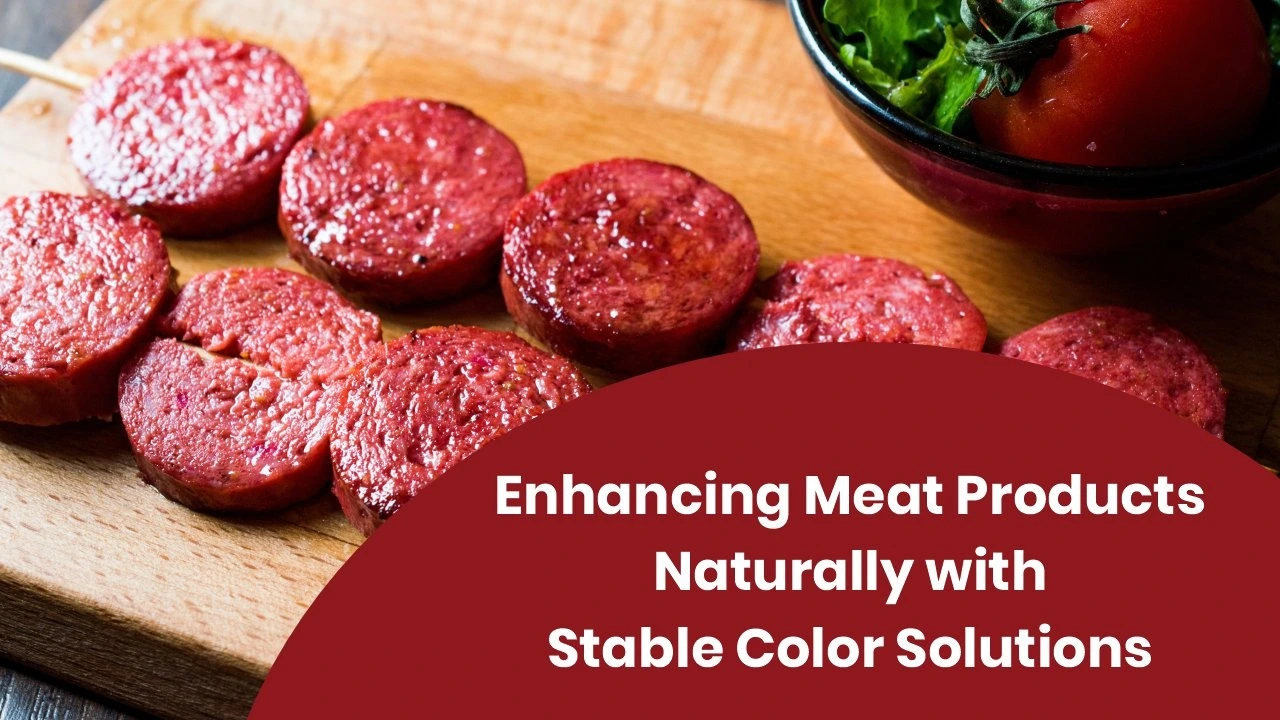
Color is one of the most powerful quality indicators in processed meat products. Particular appearance signals for sausages, patties, deli slices, cured meats, and ready-to-eat items provide information on freshness, flavor profile, and production consistency. In the light of rising consumption of processed meats globally, visual uniformity has become one of the key differentiators for brands. Rapidly developing plant-based and blended meats introduced new formulation challenges because these products need to replicate the color profile of traditional meat both in the raw state and after cooking. The predictable and stable coloration became an intrinsic part of product development in this growing market.
Natural color ingredients have useful applications in processed meat products in jurisdictions where their use is permitted. The most used natural pigments are paprika oleoresin, annatto, carmine, beet extracts, and curcumin. These natural pigments offer a spectrum of red, orange, and yellow shades for cooked, cured, and plant-based products. Each ingredient has its own strengths concerning solubility, heat stability, and resistance to oxidation. Enhanced emulsified and encapsulated forms ensure greater uniformity in pigment dispersion and protection of the color during cooking and storage.
Natural color solutions for processed meats enable excellent functional performance. Their heat stability secures the desired shade in grilling, roasting, frying, and retorting. Their formulation supports shelf life and allows the product to present its intended appearance throughout the distribution chain. The encapsulated pigments minimize migration in high-fat applications and improve color homogeneity. Batch-to-batch consistency is yet another important advantage, as this helps the processor to minimize rework, facilitate operational throughput, and meet customer specifications more effectively.
Although regulations restrict the use of added colors to a few fresh meat categories, natural pigments have broad applications to the processed and cooked segments. Some of the categories that require color consistency from raw mix through the final cooked presentations include sausages, patties, deli meats, cured items, and ready-to-eat products. Plant-based or blended meats also require color systems that simulate, for example, the raw-to-cooked appearance of traditional meats. Natural pigments developed for high shear processes such as extrusion enable the creation of authentic pink, red, and brown shades that remain true-to-color through cooking and storage.
Technological advancements in color extraction, including process like encapsulation, enhance oxidative protection and support color retention during refrigerated or frozen storage. Improved light stability maintains vibrancy under retail display lighting conditions. Controlled pigment migration assures uniform coloration in high-moisture and high-fat meat products. It is these performance attributes that are fundamental to those companies distributing products throughout long supply chains or varied climatic conditions. Vinayak’s Ecocol offers heat stable color solutions for meat products.
Innovation within the Meat Industry Innovation in natural color technology is accelerating, with next-generation pigments in development offering even higher heat tolerance and stronger oxidative resistance, with improved performance in high shear applications like extrusion. And encapsulation technologies will move forward to ensure that pigments remain stable even in the most demanding production environments. Plant-based and blended meats continue to drive demand for pigments which can simulate traditional meat color transitions. Sustainability, traceability, and secure global sourcing are other important shapers of color ingredient development in the future.
The processed meat industry is in an evolving state in need of color systems that are stable, reliable, and compliant. In general, natural color solutions perform well in processed, cooked, and plant-based formats where their use is allowed. Well-engineered natural pigments offer better production consistency, stronger market positioning, and better readiness for future regulatory requirements when adopted by manufacturers. Having color stability is more than a purely aesthetic benefit in an industry where appearance determines consumer acceptance. It is a strategic and operational priority.
Vinayak Ingredients (INDIA) Pvt. Ltd. has over 24+ years of experience in delivering high-quality Food Additives. We focus and manufacture products obtained from Natural sources such as Natural Colors, Spray-dried Fruit and Vegetable Powders & Natural Extracts which are eco-friendly and environmentally sustainable.